


Vitamin D Level Test: Fast Local Lab Care
If you’re considering a vitamin D level test near New Hope, you may be wondering what the test measures, whether it fits your needs, and how to understand the result. The number matters most when considered alongside your health history and the reason for testing.
This guide covers what a vitamin D blood test measures, what to discuss before testing, and how to review the result with a clinician. Fareed Clinic in Plymouth provides Labcorp testing to clinic patients and people who aren’t enrolled, offering a local resource for people exploring lab testing and care.
Table of Contents
What does a vitamin D level test measure?
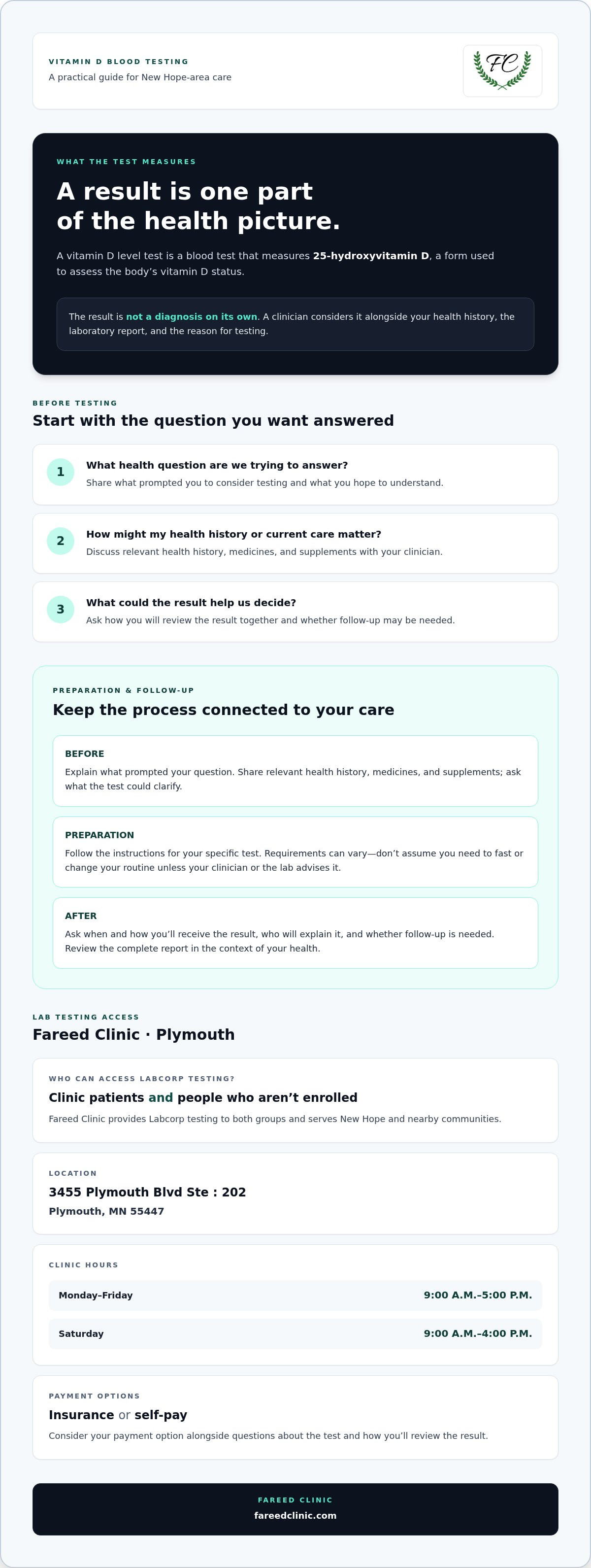
A vitamin D level test is a blood test that measures 25-hydroxyvitamin D, a form used to assess the body’s vitamin D status. The result gives a clinician one piece of information to consider alongside your health history and the reason for testing.
A lab result is not a diagnosis on its own. Its interpretation can depend on the laboratory’s report, your health circumstances, and why the test was ordered. A clinician can explain what the result means in your situation and discuss any relevant next steps. For further background, see Vitamin D deficiency diagnosis and measurement, including how measurement is used in assessment.
What questions can a vitamin D blood test help address?
Before arranging a vitamin D level test, identify what you want to understand. Sharing your concerns and relevant health information can help guide whether testing is appropriate and how to interpret the result.
What health question are we trying to answer with this test?
How might my health history or current care affect whether testing is useful?
What will the result help us decide, and how will we review it together?
These questions connect testing to your care instead of treating one reading as a verdict. If you already have a result, bring the full report to your discussion. Your clinician can explain its context and talk through any follow-up that may be appropriate.
How to approach a vitamin D level test near New Hope
A practical approach is to clarify why you’re considering testing, discuss whether it fits your situation, and review the result with a clinician. Fareed Clinic provides Labcorp testing to clinic patients and people who aren’t enrolled with the clinic.
What should you discuss before and after testing?
Before a vitamin D level test, share what prompted your question, relevant health history, and any medicines or supplements you take. Ask what the test could clarify and how the result could inform your care. MedlinePlus offers an overview of the Vitamin D blood test; a clinician can help connect general information to your circumstances.
Follow the preparation instructions provided for your specific test. Requirements can vary, so don’t assume you need to fast or change your routine unless your clinician or the lab advises it. After testing, ask when and how you’ll receive the result, who will explain it, and whether follow-up is needed. The result is most useful when discussed alongside your health context, rather than interpreted in isolation.
For people in New Hope, Fareed Clinic’s Labcorp testing is available whether or not they are established clinic patients. Learn more about care and lab testing at Fareed Clinic as you prepare to discuss testing and next steps.
Getting lab testing through Fareed Clinic near New Hope
Fareed Clinic in Plymouth provides Labcorp testing for New Hope residents and people in nearby communities. You don’t need to be an established clinic patient to access Labcorp testing. If you’re considering a vitamin D level test, keep it connected to your care by discussing why you’re considering it with a clinician and how to understand the result.
Fareed Clinic offers insurance and self-pay options for its services. When planning for testing, consider your payment option alongside questions about the test and how you’ll review the result. This helps keep the practical details and your care discussion together.
Where can New Hope-area patients access Fareed Clinic?
Fareed Clinic is located at 3455 Plymouth Blvd Ste : 202, Plymouth, MN 55447, serving New Hope and surrounding communities. Clinic hours are Monday-Friday: 9:00 A.M. to 5:00 P.M.; Saturday: 9:00 A.M. to 4:00 P.M. The location provides access to Labcorp testing for both Fareed Clinic patients and people who aren’t enrolled.
To take the next step, book an appointment or learn about care at Fareed Clinic.
Make your next health question easier to address
You don’t have to decide on your own whether a vitamin D level test is the right next step. Start by identifying what you want to understand, then bring that question into a conversation about your health. Discussing the reason for testing and how you’ll review the result can make the process more purposeful.
Fareed Clinic provides Labcorp testing in Plymouth for clinic patients and people who aren’t enrolled. If you’re ready to discuss your health questions and care options, explore lab testing and care at Fareed Clinic.
Frequently Asked Questions
Do I need to fast before a vitamin D blood test?
Fasting requirements depend on the specific lab order and any other tests collected at the same visit. Follow the instructions you’re given. If they aren’t clear, ask the clinician or lab before changing your usual eating or medication routine. Don’t stop medicines or supplements on your own for the test.
Can I get Labcorp testing at Fareed Clinic without being a patient?
Yes. Fareed Clinic provides Labcorp testing to people who aren’t enrolled, as well as clinic patients. The Plymouth clinic serves New Hope and nearby communities, including Maple Grove, Medina, Wayzata, Minnetonka, Brooklyn Park, Edina, Bloomington, Champlin, Golden Valley, and St Louis Park. Keep your clinician involved in deciding what testing is appropriate and reviewing results.
How should I discuss my vitamin D test results with a clinician?
Bring the report, any earlier results, and a list of medicines and supplements you take. Ask how the finding fits with your health history and the reason for testing, and whether follow-up is recommended. If a result or term on the report is confusing, point it out so your clinician can explain it in plain language.


Comments