


Metabolic disease management for Better Results
Blood sugar, blood pressure, cholesterol, and weight can be connected health concerns, rather than separate issues to discuss in isolation. Metabolic disease management brings them into an ongoing primary care conversation. If you’re unsure which concerns belong in a care plan or how appointments, lab tests, and follow-up fit together, a clear starting point is to list what you’d like to address.
This article explains what ongoing metabolic care can cover, what information and questions to bring to your care team, and how Fareed Clinic supports chronic care in Plymouth. It covers care for conditions such as type 2 diabetes, hypertension, high cholesterol, and obesity, along with lab testing and in-person or telehealth visit options. Use it to prepare for a conversation about your health and possible next steps.
Table of Contents
What metabolic disease management means for long-term health
Metabolic disease management is ongoing, individualized care for concerns involving blood sugar, blood pressure, blood fats, and weight. Instead of considering one result on its own, a clinician can review your health history, discuss relevant concerns, and plan appropriate monitoring and follow-up. The care plan should reflect your health information and needs, rather than assume the same approach works for everyone.
Metabolic conditions can overlap, but they aren’t interchangeable. Metabolic syndrome refers to a related cluster of risk factors, and it’s one concept within the broader conversation about metabolic health. For background, Understanding Metabolic Syndrome can help distinguish the cluster from individual diagnoses. Fareed Clinic’s chronic care management in Plymouth includes type 2 diabetes, hypertension, hyperlipidemia, and obesity.
Which health concerns may be part of metabolic care?
These terms describe different concerns a clinician may consider when discussing your overall health:
Type 2 diabetes: A condition involving elevated blood glucose when the body doesn’t use insulin effectively.
Hypertension: Blood pressure that remains higher than recommended.
Hyperlipidemia: Higher-than-healthy levels of fats in the blood, such as cholesterol or triglycerides.
Obesity: A chronic condition involving excess body fat that can affect health.
Having one concern doesn’t mean you have the others. A clinician considers individual health information, rather than assuming that a single symptom or measurement indicates a particular condition. For a broader look at ongoing support, the Plymouth chronic disease management guide explores how chronic care can fit into long-term primary care.
How to make metabolic disease management practical and personal
Good metabolic disease management starts with a focused conversation, not a one-size-fits-all checklist. A few notes beforehand can help you use your appointment to discuss the concerns and goals that matter to you. Your clinician can consider your preferences and clinical needs when discussing a care plan.
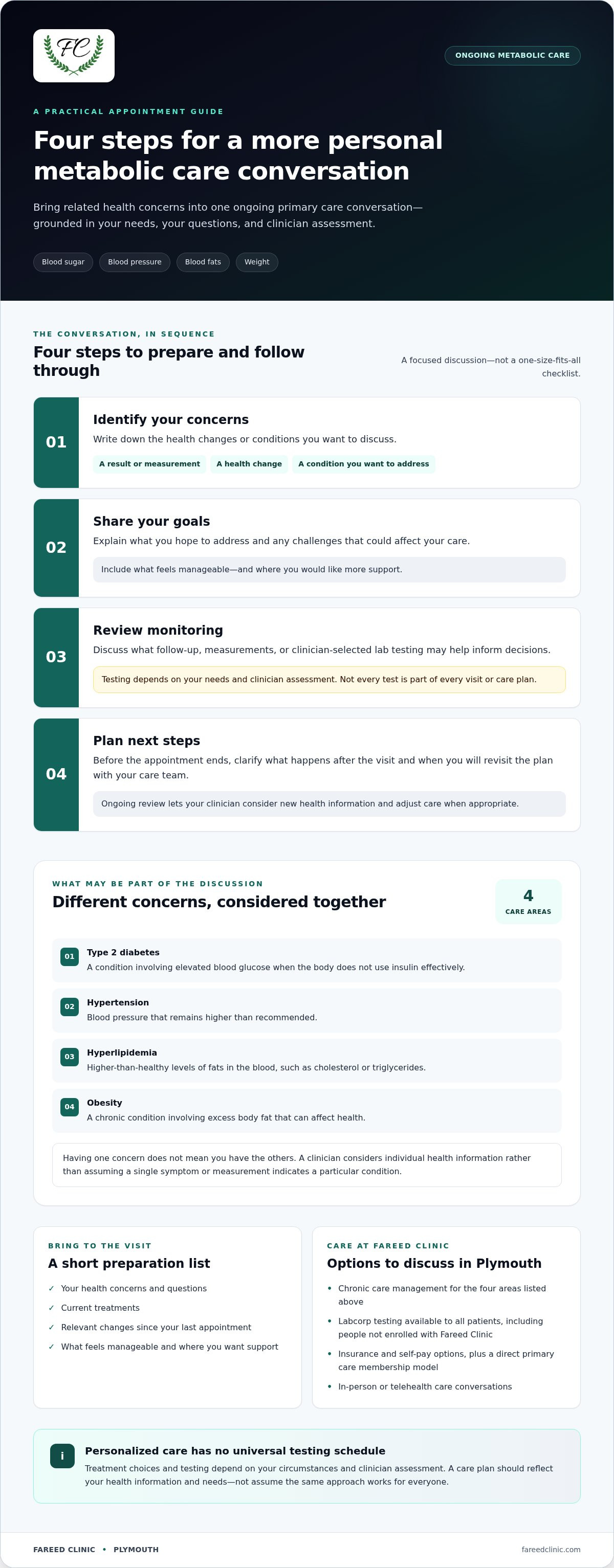
Identify your concerns. Write down the health changes or conditions you want to discuss.
Share your goals. Explain what you hope to address and any challenges that could affect your care.
Review monitoring. Discuss what follow-up, measurements, or clinician-selected lab testing may help inform decisions.
Plan next steps. Before the appointment ends, clarify what happens after the visit and when you’ll revisit the plan with your care team.
Ongoing review gives a clinician a chance to consider new health information, discuss how the plan is working for you, and adjust care when appropriate. Treatment choices and testing depend on your circumstances and clinician assessment, so there’s no universal medication, target, or testing schedule to follow.
What should you bring to a metabolic care conversation?
Bring a short list of your health concerns, current treatments, questions, and relevant changes since your last appointment. Note what feels manageable and where you’d like more support. Lab testing may help inform care when selected by your clinician, but the type of testing depends on your needs. For information focused specifically on screening, see the diabetes screening guide.
Fareed Clinic provides chronic care management in Plymouth, where you can discuss your concerns and next steps with a care team. Learn more about Fareed Clinic’s chronic care management.
Metabolic disease management at Fareed Clinic in Plymouth
Fareed Clinic provides chronic care management in Plymouth for type 2 diabetes, essential hypertension, hyperlipidemia, and obesity. Care is based on your health concerns and clinician assessment, with conversations and follow-up to support ongoing management. Your care team can discuss your needs without assuming a quick fix or the same plan for everyone.
Labcorp testing is available to all patients, including people who aren’t enrolled with Fareed Clinic. A clinician can help determine whether testing is appropriate for your situation and how results may inform care. The testing available to patients does not mean every test is part of every visit or care plan.
Fareed Clinic offers insurance and self-pay options, as well as a direct primary care membership model. Telehealth visits are also available for care conversations. The appropriate way to access care depends on your needs and the nature of the visit. You can discuss your health concerns and preferences as you consider an approach to metabolic disease management.
How to take the next step with local chronic care
Booking an appointment online is one way to start a conversation about your health concerns and ongoing care needs. Before your visit, note the conditions or changes you want to discuss, your current treatments, and any questions about follow-up. Your clinician can talk through suitable next steps, including whether an in-person or telehealth visit fits your situation.
Explore Fareed Clinic’s care options and book an appointment online to discuss your needs.
Take a thoughtful next step for your health
Long-term care doesn’t need to begin with a complete plan or every answer. Start by deciding what you’d like to understand better and making space to discuss it with a clinician. From there, metabolic disease management can develop through shared decisions and regular review, with attention to what matters in your everyday life.
Fareed Clinic provides chronic care management in Plymouth for people seeking ongoing support. Explore chronic care management at Fareed Clinic and book an appointment online to discuss your health concerns.
Frequently Asked Questions
Is metabolic disease management only for people with diabetes?
No. Diabetes is one possible part of metabolic disease management. Care may also address hypertension, hyperlipidemia, or obesity, depending on a person’s health and clinician assessment. These conditions are distinct, and having one doesn’t automatically mean someone has another. A clinician can help determine which concerns belong in an individual care plan and what to prioritize.
Can metabolic disease be managed without medication?
Sometimes, but there isn’t one approach that fits everyone. A care plan may include changes to daily habits, medication, or a combination, depending on the condition and individual health needs. Don’t start, stop, or change a prescribed medication without discussing it with your clinician. They can explain potential options and help you weigh them in light of your health and preferences.
What should I expect at a metabolic disease management appointment?
Expect a conversation about your health history, current priorities, and what you hope to address. The clinician may explain possible next steps and how follow-up could work. Tests and treatment aren’t automatically the same for everyone. Fareed Clinic is in Plymouth and serves patients in nearby Maple Grove, Medina, Wayzata, Minnetonka, Brooklyn Park, Edina, Bloomington, Champlin, New Hope, Golden Valley, and St. Louis Park.
Can I get Labcorp testing without being a Fareed Clinic patient?
Yes. Labcorp testing is available to all patients, including people who aren’t enrolled with Fareed Clinic. A clinic membership isn’t required to access this testing. Which tests are appropriate depends on the clinical question and your circumstances, so not every test is suitable for everyone. A clinician can explain how lab work may relate to your care.


Comments