


FastMed Alternatives for Uninsured Patients
Table of Contents
Why Uninsured Patients Need FastMed Alternatives
Urgent Care Without Insurance: What You Should Know
Self-Pay Urgent Care Options and Transparent Pricing
Urgent Care vs. Emergency Room Without Insurance
Affordable Primary Care for Uninsured Patients
Financial Assistance and Payment Plans for Self-Pay Patients
How Income-Based Eligibility Works
Documentation You Will Typically Need
How to Apply and What to Expect
Payment Plans: What to Ask Before You Agree
Prescription and Medication Assistance
Billing Protections to Know
How to Choose the Right Care Setting for Your Needs
Emergency Room: Go Now
Urgent Care or Express Care: Same-Day, Non-Emergency
Primary Care: Ongoing and Preventive
Telehealth: Convenient for Simple Issues
Retail Clinics: Quick Screenings and Vaccines
Community Health Centers: Sliding-Scale Care
A Simple Decision Rule
Frequently Asked Questions
Last Updated: October 19, 2026
Why Uninsured Patients Need FastMed Alternatives
Being uninsured doesn't mean accepting limited options or unpredictable costs. When you're looking for a fastmed alternative uninsured patients can trust, you're asking: where can I get quality care without insurance, surprise bills, or long waits? Your health shouldn't depend on your employment status.
Many uninsured and underinsured patients delay care because they're unsure about costs and billing.
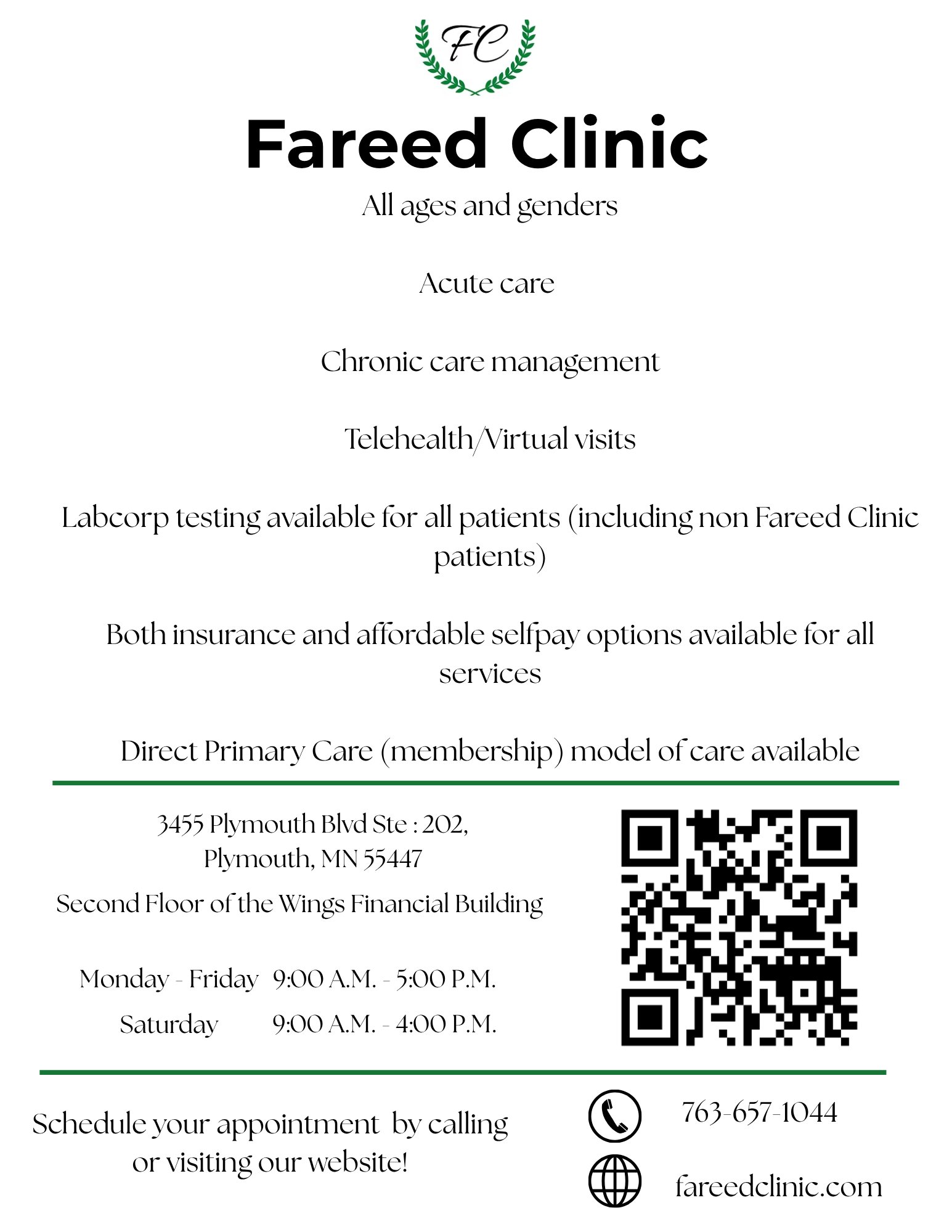
At Fareed Clinic, we serve patients across the Minneapolis-St Paul area facing exactly this situation. Our flat-rate self-pay model removes the guesswork: you know the cost before you walk in, with no hidden fees or surprise bills.
Pro Tip The biggest mistake uninsured patients make is avoiding care entirely because they fear costs.
Urgent Care Without Insurance: What You Should Know
Urgent care clinics handle non-emergency conditions needing prompt attention: infections, minor injuries, acute pain, and routine sick visits. For uninsured patients, urgent care is often the natural choice, faster than the ER and more accessible than a primary care appointment weeks out.
Urgent care without insurance is possible, but understand what you're walking into. Walk-in centers typically operate on a self-pay model, charging per visit. Cost varies by location, services needed, and whether tests or imaging are involved.
The real advantage is speed and predictability. No appointment, no insurance verification, you show up, get seen, and pay at the end. Many facilities post base visit fees online so you can estimate costs beforehand.
However, urgent care has limits. These facilities handle acute problems, not ongoing management. For diabetes, hypertension, or other chronic conditions requiring regular monitoring and medication adjustments, you need a primary care provider who knows your history and coordinates care over time.
Self-Pay Urgent Care Options and Transparent Pricing
Self-pay urgent care means paying directly for your visit without insurance. The major advantage: no verification delays, no claims processing, no waiting to see what coverage pays.
Expect a base visit fee, typically around $100 to $200 depending on the facility, with additional costs for tests, imaging, medications, or procedures. Some facilities are transparent upfront; others aren't, which is why asking about pricing before treatment matters.
The best self-pay providers publish fees clearly, basic visit costs, common test costs, and specific service prices, so you can make an informed decision about where to seek care.
Fareed Clinic offers a flat-rate self-pay fee of $149.99 for a complete visit, which includes the provider consultation and most routine care. This straightforward pricing removes uncertainty. You know exactly what you're paying, and you're not hit with surprise charges later.
Transparent pricing lets you budget and plan.
Care Setting | Typical Self-Pay Cost | What's Included | Best For |
Urgent care (typical) | $100-$200+ | Visit only; tests/imaging extra | Acute injuries, infections, sick visits |
Retail clinic | $60-$150 | Limited services; basic screening | Minor issues, vaccinations, screening |
Primary care (self-pay) | $100-$200 | Full visit, consultation, care planning | Ongoing management, chronic conditions |
Fareed Clinic (self-pay) | $149.99 | Complete visit, consultation, most routine care | Minor illnesses, injuries, chronic disease management |
Key Takeaway The key difference between self-pay urgent care options is transparency. Facilities that publish their fees and explain what's included upfront give you control over your healthcare decisions.
Urgent Care vs. Emergency Room Without Insurance
The ER is for emergencies: chest pain, severe trauma, uncontrolled bleeding, difficulty breathing, sudden neurological symptoms. Going to an ER for a minor issue like a cough or small cut means a much larger bill than urgent care, and a significantly longer wait.
The critical difference: federal law requires emergency rooms to treat anyone regardless of ability to pay. But this protection doesn't make ER visits free, you'll receive a bill, often a substantial one.
ER costs for uninsured patients run far higher than urgent care.
Urgent care costs a fraction of ER care for the same problems, you're treated faster, know the cost upfront, and avoid the financial shock of ER bills.
The practical rule: ER for true emergencies, urgent care for acute but non-life-threatening problems, primary care for ongoing management and prevention. This keeps costs reasonable and matches care to your actual need.
Watch Out Uninsured patients sometimes avoid the ER because they fear the bill, then their condition worsens and becomes truly emergent. If you're experiencing chest pain, difficulty breathing, severe bleeding, or sudden neurological symptoms, go to the ER. Financial concerns come second to your life.
Affordable Primary Care for Uninsured Patients
Primary care is where real healthcare happens: chronic conditions get managed, preventive screening catches problems early, and your medical history is known and tracked. For uninsured patients, finding affordable primary care is essential but often difficult.
Many uninsured patients cycle through urgent care for acute problems but never establish a primary care relationship.
A fastmed alternative uninsured patients need is affordable primary care, available through either a community health center with income-based sliding-scale fees or a provider with transparent self-pay pricing.
Self-pay primary care offers another option: a set fee per visit, no insurance required. Fareed Clinic operates this way, providing comprehensive primary and express care with transparent pricing. You can establish an ongoing relationship with Dr.
Financial Assistance and Payment Plans for Self-Pay Patients
Not every uninsured patient can pay a visit fee upfront. Financial assistance and payment plans bridge that gap, but the details matter. Here's what you need to know to apply, qualify, and avoid surprise bills.
How Income-Based Eligibility Works
Most financial assistance programs use federal poverty guidelines to set eligibility, often on a sliding scale: household income below a certain percentage of the federal poverty level may qualify for free or reduced-cost care. Thresholds vary by provider, when you call, ask directly: "What income level qualifies, and what documentation do you require?" (Source: factors influencing healthcare costs)
Documentation You Will Typically Need
Applications usually require proof of income and identity. Common documents include:
Recent pay stubs or a letter from your employer
Prior year's tax return or W-2
Unemployment benefit statements
Social Security or disability award letters
Photo ID and proof of address
Gather these before you apply. Missing documents are the most common reason applications stall.
How to Apply and What to Expect
Ask for the financial assistance application at the front desk or billing office, or download it from the provider's website. Submit it with your documentation. Processing times vary from days to several weeks, follow up in writing and keep copies of everything.
Payment Plans: What to Ask Before You Agree
If you can pay something but not everything at once, ask about an interest-free payment plan. Key questions:
Is there a minimum monthly payment?
Are there any fees or interest charges?
Will the plan appear on your credit report?
What happens if you miss a payment?
Many providers will work with you, but get the terms in writing before you sign.
Prescription and Medication Assistance
Medication costs can rival visit costs. Ask your provider about generic alternatives or manufacturer patient assistance programs. For ongoing prescriptions, compare cash prices at local pharmacies, they can vary widely, and ask about discount cards or pharmacy membership programs.
Billing Protections to Know
Federal rules require hospitals to post standard charges and offer a plain-language summary of billing protections. You have the right to request an itemized bill and to ask for an estimate before non-emergency care. If you receive a bill that seems wrong, request an itemized statement and compare it to the estimate.
Pro Tip Before any non-emergency visit, ask for a written estimate and confirm what is included. This single step prevents most billing surprises.
How to Choose the Right Care Setting for Your Needs
Choosing the right care setting when you're uninsured is not just about cost, it's about matching your symptoms to the appropriate level of care so you get treated safely and avoid unnecessary bills. Use this symptom-based guide to decide where to go.

Emergency Room: Go Now
Call 911 or go to the nearest emergency room for:
Chest pain or pressure
Difficulty breathing or shortness of breath
Severe bleeding that won't stop
Sudden weakness or numbness on one side, facial drooping, or trouble speaking (stroke signs)
Severe head injury or loss of consciousness
Seizures that don't stop
Severe abdominal pain with vomiting or fever
Federal law requires emergency departments to screen and stabilize anyone with an emergency medical condition, regardless of ability to pay. Financial concerns come second to your life.
Urgent Care or Express Care: Same-Day, Non-Emergency
Choose urgent care for problems that need prompt attention but are not life-threatening:
Fever, flu-like symptoms, or persistent cough
Minor cuts, sprains, or suspected simple fractures
Ear pain, sore throat, or sinus symptoms
Urinary tract symptoms
Minor eye redness or irritation
Rash or minor allergic reactions
Urgent care is faster and less expensive than the ER for these issues. Many clinics post self-pay prices, so ask before you arrive.
Primary Care: Ongoing and Preventive
See a primary care provider for:
Chronic condition management (diabetes, hypertension, asthma)
Medication refills and adjustments
Preventive screenings and annual exams
New or worsening symptoms that aren't urgent
Follow-up after an urgent care or ER visit
Establishing primary care, even on a self-pay basis, gives you continuity and catches problems early when they're easier and cheaper to treat.
Telehealth: Convenient for Simple Issues
Virtual visits work well for:
Minor respiratory symptoms
Rash evaluation
Medication questions
Follow-up conversations
Telehealth may not be appropriate for symptoms requiring a physical exam or tests. Ask whether the provider can prescribe if needed.
Retail Clinics: Quick Screenings and Vaccines
Pharmacy-based retail clinics handle:
Vaccinations
Basic screenings (blood pressure, glucose)
Minor skin conditions
Simple respiratory infections
They are convenient and often lower cost, but they are not equipped for complex or chronic care.
Community Health Centers: Sliding-Scale Care
Federally qualified health centers provide primary care on a sliding fee scale based on income. They serve uninsured patients and often offer behavioral health and dental services. Wait times can be longer, so call ahead for availability.
A Simple Decision Rule
If it's life-threatening, go to the ER. If it's acute but not dangerous, choose urgent care or express care. If it's ongoing or preventive, establish primary care. For simple screenings or vaccines, a retail clinic may suffice. When in doubt, call the clinic and describe your symptoms, they can tell you whether they can treat you or whether you need a higher level of care.
Watch Out If you are unsure whether your symptoms are an emergency, err on the side of caution and call 911 or go to the ER. Delaying emergency care can be dangerous.
Frequently Asked Questions
What are the main alternatives to FastMed for uninsured patients?
Uninsured patients have several options beyond FastMed, including dedicated urgent care clinics, community health centers, primary care practices with self-pay options, and retail clinics. Primary care clinics like Fareed Clinic offer flat-rate self-pay visits starting at $149.99, which often provide more comprehensive care than urgent-care-only facilities. Community health centers typically offer sliding-scale fees based on income. The best choice depends on your specific health need, whether you need ongoing care or a one-time visit, and your budget.
Can you go to urgent care without health insurance?
Yes, you can visit urgent care without insurance. Most urgent care clinics accept uninsured walk-in patients and offer self-pay pricing. However, you should call ahead to ask about their specific self-pay rates, accepted payment methods, and what services are included in their base visit fee. Ask whether additional charges apply for tests, imaging, or procedures. Many clinics offer discount programs or payment plans for uninsured patients. Having a transparent conversation about costs before your visit helps avoid surprises.
How does self-pay urgent care compare to primary care for uninsured patients?
Self-pay urgent care is typically faster for acute, non-emergency issues like minor injuries or infections, but primary care clinics offer continuity and are better for ongoing conditions like diabetes or hypertension. Urgent care visits are usually one-time encounters, while primary care builds a relationship with a physician who tracks your medical history. For uninsured patients, primary care practices with flat-rate self-pay options (like Fareed Clinic at $149.99 per visit) can be more cost-effective long-term if you need regular monitoring. Urgent care is ideal for sudden illnesses; primary care is ideal for chronic disease management and preventive care.
What financial assistance options are available for uninsured patients at self-pay clinics?
Many self-pay clinics offer sliding-scale fees based on household income, discount programs for uninsured patients, and payment plans that let you spread costs over time. Some clinics also partner with prescription assistance programs to reduce medication costs. Before your visit, ask about income-based discounts, whether they accept payment plans or credit cards, and if they offer bundled pricing for multiple services. Always ask about these options upfront to understand your actual out-of-pocket cost.
Book Online


Comments