


Arthritis Management in Brooklyn Park for Causes and Care Options
Arthritis isn’t one disease: according to the Centers for Disease Control and Prevention, the term covers more than 100 types of arthritis and related conditions that cause joint pain and inflammation. The cause depends on the type: osteoarthritis develops as cushioning in the joints wears down, while rheumatoid arthritis occurs when the immune system mistakenly attacks the body’s tissues. Effective arthritis management in Brooklyn Park starts with understanding which type may be behind your symptoms.
Pain, stiffness, swelling, or reduced mobility can make everyday tasks harder, and it’s natural to want to know what may happen next. This article explains common causes, how arthritis can progress, and why early care matters. You’ll also learn how treatment options, including regenerative approaches, may fit alongside other therapies as part of an individualized plan.
Table of Contents
Can you combine regenerative arthritis treatments with other therapies?
Yes. Regenerative approaches may be combined with traditional care when appropriate, including medication, movement-based therapy, and lifestyle guidance. In Brooklyn Park, treatment choices depend on arthritis type, affected joints, inflammation, stiffness, pain, and changes in mobility.
Joint Injections and Pain Relief
Osteoarthritis develops as cartilage cushioning the ends of bones wears away, causing painful friction. It commonly affects hands, hips, knees, and the spine; arthritis can also affect shoulders, the neck, and lower back. A doctor may consider corticosteroid or hyaluronic acid injections, or regenerative options such as platelet-rich plasma (PRP), alongside other care. Ultrasound can guide an injection toward the painful area. For persistent knee pain, nerve blocks or radiofrequency ablation may be considered. A care team may include primary-care doctors, rheumatologists, or orthopedists, depending on symptoms and the type of arthritis.
Therapy and Exercise Programs
Physical therapy can tailor strengthening and stretching to improve mobility and reduce stress on joints. Occupational therapy may help patients adapt everyday tasks when arthritis affects fingers, hands, arms, or shoulders. Gentle exercise can complement injections or medication, while overworking a joint may trigger a flare. In Brooklyn Park, an evaluation can begin with a primary-care appointment; exam findings help guide treatment and any specialist referral. Community health education and peer-support programs can also help people manage daily challenges.
Medications and Their Risks
Treatment may include anti-inflammatory medicines, steroids, or hyaluronic acid injections; autoimmune conditions such as rheumatoid arthritis may require medicines that modify immune responses. Side effects and interactions vary by medication, so a doctor considers health conditions and other medicines when weighing options. Seek urgent medical care for sudden severe joint pain, rapidly worsening swelling, or inability to use a joint, especially after an injury. A combined plan can address pain while supporting movement and function.
What causes arthritis?
According to the Centers for Disease Control and Prevention, arthritis describes more than 100 types of arthritis and related conditions causing joint pain and inflammation. Causes differ: osteoarthritis develops as cartilage cushioning the ends of bones wears away, while rheumatoid arthritis is autoimmune. In rheumatoid arthritis, the immune system attacks joint tissues, causing inflammation and swelling.
Osteoarthritis becomes more common with age, but age alone doesn’t determine symptoms or severity. Most people over age 60 have some degree of osteoarthritis, although its severity varies. Among people over age 50, more women than men have osteoarthritis. Previous joint injury and repeated strain can also contribute to arthritis developing.
Osteoarthritis symptoms can include painful or stiff joints, swelling, reduced flexibility, and a grating sensation. It often affects the hands, hips, knees, and spine, limiting mobility in ways that may change over time. Rheumatoid arthritis often begins between ages 40 and 60 and can affect multiple joints on both sides of the body. It may also affect the eyes, heart, lungs, and skin, with symptoms that flare and ease.
A physical exam helps assess symptoms and joint movement. Imaging can show joint changes, while blood tests may help evaluate suspected rheumatoid arthritis. Joint-fluid tests can also support diagnosis. Identifying the likely cause helps shape treatment, which may include medication, physical therapy, or injections, depending on the condition and its effects.
To find a rheumatologist near Brooklyn Park, ask a primary-care clinician about a referral for persistent joint symptoms or suspected inflammatory arthritis. A consultation can help clarify the diagnosis and care options.
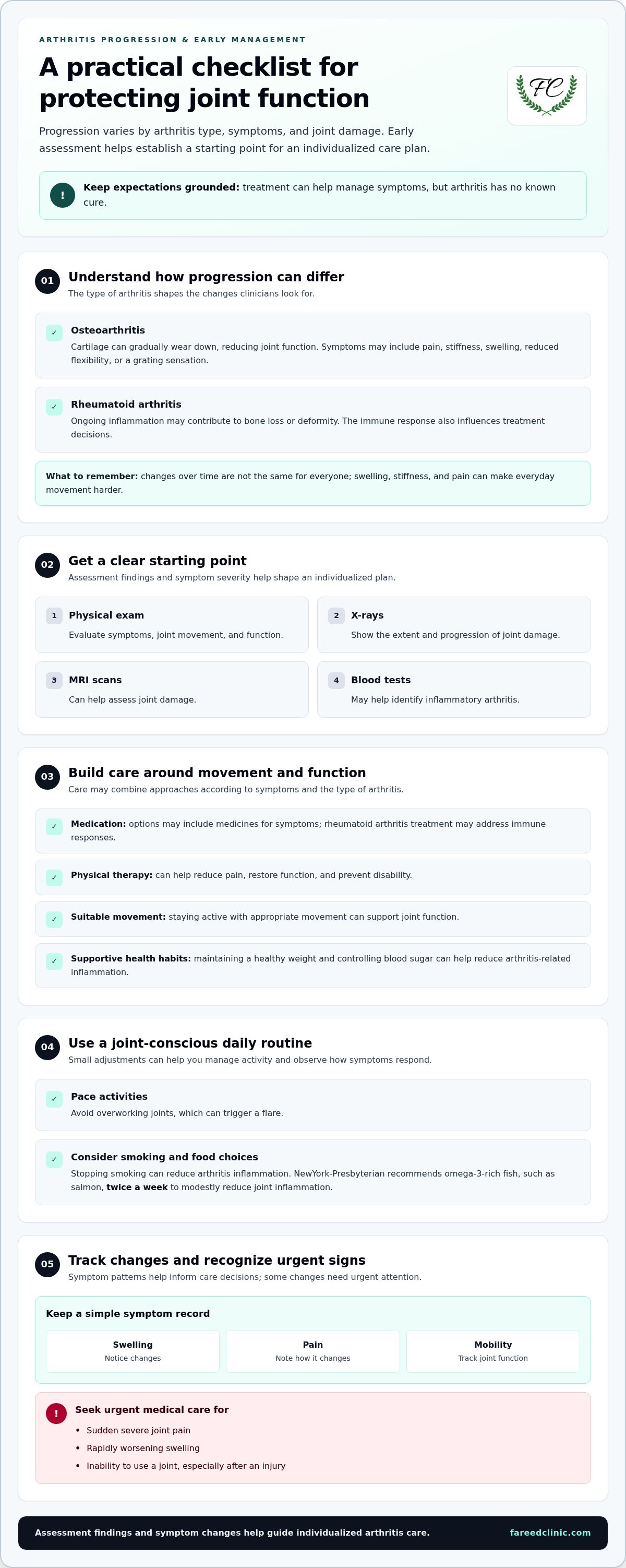
Arthritis progression and early management
Arthritis changes over time, but progression varies by type, symptoms, and joint damage. Osteoarthritis can gradually reduce cartilage and joint function. Rheumatoid arthritis may cause bone loss or deformity when inflammation continues. Swelling, stiffness, and pain can make everyday movement harder. Treatment can help manage symptoms, although arthritis has no known cure.
Early assessment gives a clearer starting point. A physical exam helps evaluate movement and symptoms, while X-rays can show the extent and progression of joint damage. MRI scans can help assess damage, and blood tests may help identify inflammatory arthritis. These findings, alongside symptom severity, guide an individualized treatment plan.
Care may include medicine, physical therapy, and changes that support joint function. Physical therapy can help reduce pain, restore function, and prevent disability. Staying active with suitable movement, maintaining a healthy weight, and controlling blood sugar can help reduce arthritis-related inflammation. For rheumatoid arthritis, the immune response also shapes treatment decisions.
At home, pace activities and avoid overworking joints, which can trigger a flare. Stopping smoking can reduce arthritis inflammation. NewYork-Presbyterian recommends eating omega-3-rich fish, such as salmon, twice a week to modestly reduce joint inflammation. Track swelling, pain, and mobility changes so your care team can see how symptoms respond. To discuss persistent arthritis symptoms and next steps, schedule a primary-care evaluation.
Fareed Clinic: Chronic Medical Problem Management
Fareed Clinic provides Chronic Medical Problem Management for people seeking ongoing support with arthritis symptoms and related health concerns. A physical exam can help assess joint movement, pain, and changes in daily function. Lab tests and screenings may also contribute useful information when evaluating health concerns or planning continued care.
For some patients, shoulder or knee injections may be part of care for joint symptoms. The right next step depends on the affected joint, symptoms, and overall health. Consider an appointment if joint discomfort or stiffness is affecting everyday activities, or if you need help managing an ongoing condition. Contact Fareed Clinic to discuss your care.
Take the Next Step Toward Steadier Care
Choose a next step that helps turn uncertainty into a practical plan. Before an appointment, note which activities have become difficult, what changes you’ve noticed, and what questions you want answered. These details can help focus a conversation on your priorities and the care options that fit your needs. A thoughtful approach to arthritis management in Brooklyn Park can also account for how symptoms affect work, rest, and everyday movement, rather than focusing on a single joint in isolation. Fareed Clinic provides ongoing chronic condition management, with physical exams and lab tests and screenings as part of its care offerings. If you’re ready to talk through what comes next, contact Fareed Clinic about arthritis care. Taking that first step can help you feel more prepared to make informed decisions about your health.
Frequently Asked Questions
Can arthritis get worse if left untreated?
Arthritis can progress, though its course depends on the type and the person. Ongoing rheumatoid arthritis may cause bone loss or joint deformity, while osteoarthritis involves cartilage deterioration. An evaluation can identify changes and help guide care before symptoms interfere further with daily activities. Track new swelling, reduced movement, or increasing difficulty using an affected joint.
How do you know if you have arthritis?
Symptoms alone can’t confirm arthritis, but persistent joint pain, stiffness, swelling, or reduced flexibility are reasons to seek an evaluation. Note which joints bother you, how symptoms affect activities such as climbing stairs or gripping objects, and whether symptoms change over time. This record gives a clinician practical details to consider during an exam.
How is Arthritis Diagnosed?
Diagnosis can involve a physical exam, imaging, and blood or joint-fluid tests. A clinician assesses the affected joints and considers the pattern of symptoms. Blood testing may help evaluate suspected rheumatoid arthritis, while imaging can show joint changes. These findings help distinguish possible causes and guide a treatment plan, rather than relying on one symptom or test alone.
What are the symptoms of arthritis?
Symptoms can include joint pain, stiffness, swelling, decreased flexibility, and a grating sensation. Bone spurs may also occur. Arthritis can affect the hands, hips, knees, spine, shoulders, neck, or lower back. Notice whether symptoms make tasks such as walking, reaching, or opening containers harder, and share those examples during an evaluation.
What does arthritis feel like?
Arthritis may feel like pain, stiffness, or swelling around an affected joint, and movement may become more limited. Some people notice a grating sensation or reduced flexibility. The experience varies with the joints involved and the condition’s severity. For arthritis management in Brooklyn Park, describing how symptoms affect a typical day can help make a care discussion more focused.


Comments