


Steroid Injection for Shoulder Bursitis in Medina: What It Does
A steroid injection for shoulder bursitis in Medina targets inflammation in the subacromial bursa, the small cushion beneath the shoulder’s acromion. It may include a local anesthetic to ease discomfort during the injection, while the steroid can take a few days to begin reducing inflammation. A scan may show bursitis even when another shoulder structure is causing the pain, so understanding the bursa’s role matters.
Shoulder pain that worsens when you lift your arm can be frustrating, especially when the cause isn’t clear. This article explains how the subacromial bursa relates to common symptoms, what an injection is intended to do, and when it may be considered if other approaches haven’t eased persistent pain. You’ll also learn what to expect from its effects, helping you have a clearer conversation about your shoulder care.
Table of Contents
What is a Steroid Injection for Shoulder Bursitis?
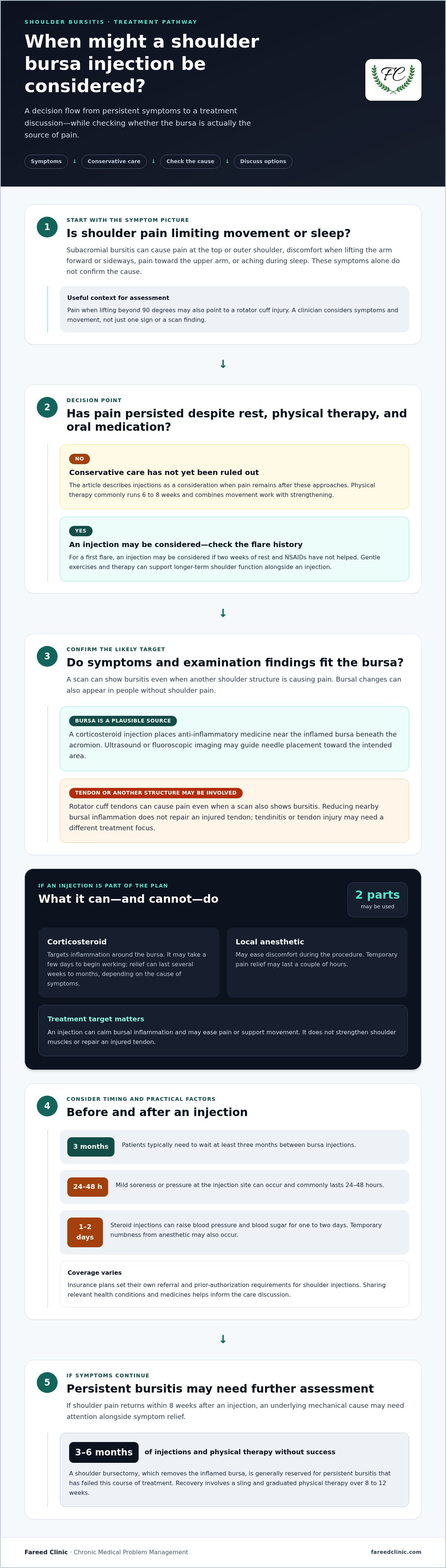
A shoulder bursa injection places corticosteroid near inflamed tissue beneath the acromion. A local anesthetic may also be used to reduce discomfort during the procedure.
Corticosteroid and Anesthetic Injection Action
A steroid injection for shoulder bursitis in Medina delivers anti-inflammatory medicine to the targeted bursa. If the injection includes an anesthetic, pain relief may last a couple of hours, while the steroid may take a few days to work. Ultrasound or fluoroscopic imaging may guide needle placement, helping direct treatment toward the intended area.
Reducing Shoulder Inflammation
Cortisone is a corticosteroid that reduces inflammation around the bursa, a cushion that helps shoulder tissues move smoothly. Less irritation may ease pain and support movement, but an injection doesn’t strengthen shoulder muscles or repair an injured tendon. Relief can last several weeks to months, depending on the cause of symptoms.
Reasons for Considering an Injection
A steroid injection for shoulder bursitis in Medina may be considered when persistent pain remains after rest, physical therapy, and oral medication. For a first flare, an injection may be considered if two weeks of rest and NSAIDs haven’t helped. Gentle exercises and therapy can support longer-term shoulder function alongside an injection.
Insurance plans set their own referral and prior-authorization requirements for shoulder injections, so the rules vary by plan. Patients typically need to wait at least three months between bursa injections.
Injection Risks and Side Effects
Temporary numbness from anesthetic and mild soreness or pressure at the injection site can occur. Soreness commonly lasts 24-48 hours after a bursa injection. Steroid injections can also raise blood pressure and blood sugar for one to two days. Sharing relevant health conditions and medicines before treatment helps inform the care discussion.
When injections may be considered after conservative treatment
For patients in Medina, Minnesota, a corticosteroid injection may be considered when shoulder bursitis pain persists despite rest, physical therapy, and oral medication. For a first flare, it may be considered after two weeks of rest and NSAIDs haven’t helped. A typical physical therapy course runs 6 to 8 weeks, combining movement work and strengthening. These approaches address shoulder function as well as pain, while an injection targets inflammation.
An injection targets inflammation around the bursa, not every cause of shoulder pain. Rotator cuff tendons can cause symptoms even when a scan also shows bursitis. Because bursal changes can appear in people without shoulder pain, clinicians consider symptoms and examination findings alongside imaging. Tendinitis or tendon injury may require a different treatment focus; reducing nearby bursal inflammation doesn’t repair damaged tissue.
When an injection is considered, ultrasound or fluoroscopic imaging may guide the needle toward the bursa. Bursa injections can also be used for other sites, including the elbow; elbow bursitis guidance commonly includes resting the joint for 24-48 hours afterward. The joint and cause of inflammation shape the treatment plan, so shoulder and elbow injections aren’t interchangeable.
Surgery is a later option for persistent bursitis. A shoulder bursectomy removes the inflamed bursa and is generally reserved for cases that have failed 3 to 6 months of injections and physical therapy. Recovery involves a sling and graduated physical therapy over 8 to 12 weeks. If shoulder pain returns within 8 weeks after an injection, the underlying mechanical cause may need attention alongside symptom relief.
Shoulder bursitis and the sub-acromial bursa
The subacromial bursa sits between the humeral head and the acromion, the bony roof of the shoulder. This small cushion helps nearby tissues move with less friction. When it becomes inflamed, pain often develops at the top or outer shoulder, where the bursa lies. Knowing its location helps explain why bursitis can hurt during everyday reaching.
Symptoms may include pain when lifting the arm forward or sideways, discomfort that travels toward the upper arm, and aching during sleep. Raising the arm overhead can aggravate symptoms. Pain when lifting beyond 90 degrees may also point to a rotator cuff injury, so pain location alone cannot identify the cause. A clinician considers movement and symptoms, not just one sign.
Imaging needs context, too. A scan can show subacromial bursitis in people without shoulder pain, and rotator cuff tendons often cause pain even when bursitis also appears on the scan. That distinction matters before a procedure: shoulder bursa injections target inflammation beneath the acromion, not every painful tendon or shoulder structure. Ultrasound or fluoroscopic imaging may help guide needle placement toward the intended area.
Activity patterns can also help explain a flare. A sudden jump in shoulder use after little play during the previous six months, such as playing five sets of tennis daily, may irritate the bursa. If shoulder pain is limiting reaching or sleep, discuss your shoulder symptoms with a clinician to understand the likely source and appropriate next steps.
Fareed Clinic: Chronic Medical Problem Management
Fareed Clinic provides Chronic Medical Problem Management for people whose shoulder symptoms persist or interfere with daily movement. A physical exam can help assess the shoulder and determine whether an injection fits the symptoms and suspected cause. Fareed Clinic also offers Shoulder & Knee Injections as an option for shoulder care when appropriate. An injection targets inflammation, but may not address tendon problems or movement patterns contributing to discomfort. Sharing which activities trigger pain, how long symptoms have lasted, and what treatments you’ve tried can help focus the discussion. For persistent shoulder concerns, contact Fareed Clinic to discuss your care.
Take the Next Step Toward Shoulder Care
Choosing whether to pursue a steroid injection for shoulder bursitis in Medina starts with a broader question: what is keeping your shoulder from moving comfortably? Before discussing care, consider which movements are difficult, how symptoms affect sleep or daily tasks, and what you hope to regain. These details can make a clinical conversation more focused and useful.
Fareed Clinic offers Chronic Medical Problem Management, Physical Exams, and Lab Tests and Screenings to support care discussions and evaluation. The right next step depends on your symptoms, examination, and health needs. You can contact Fareed Clinic to discuss your shoulder and explore an appropriate path forward. A thoughtful conversation can help you feel more prepared to make a decision about your care.
Frequently Asked Questions
Do shoulder cortisone injections hurt?
A local anesthetic can be included to minimize discomfort during the injection. Temporary numbness may follow, and mild soreness or pressure at the injection site is common for 24-48 hours. After treatment, avoid activities that stress the shoulder for at least 24 hours. These details can help you plan your day and understand what sensations may occur afterward.
What are cortisone shots for shoulder pain?
These are corticosteroid injections used to reduce inflammation linked to shoulder pain. A cortisone injection can involve one of five different drugs, depending on the clinician’s preference and the patient’s needs. The medicine is directed toward the area being treated rather than taken as a pill for general symptoms.
What is a bursa injection?
A bursa injection places medicine into or near a bursa, a small cushion that helps tissues move smoothly. For shoulder bursitis, the target is the subacromial bursa. Corticosteroid injections aren’t appropriate for septic bursitis, which involves infection; that condition may require antibiotics and fluid drainage instead. Identifying the type of bursitis matters before choosing treatment.
How do I know if I need a cortisone shot for my shoulder?
A cortisone shot may be considered when shoulder bursitis symptoms persist despite rest, physical therapy, and oral medication. A scan alone doesn’t establish that bursitis is causing pain, since bursal changes can appear without symptoms. An assessment should consider your symptoms and shoulder examination, including whether another structure, such as the rotator cuff, could explain the pain.
How long do the effects of steroid shoulder shots last?
Pain relief can last several weeks to months, while the anti-inflammatory effect can last 6 to 12 weeks. The cause of the shoulder pain influences how long improvement lasts. Follow-up appointments help assess the response and guide decisions about next steps, rather than relying only on how the shoulder feels immediately after treatment.



Comments