


Direct Primary Care vs. Insurance: Choosing the Best Model for Your Health in 2026
- mtariqfareed
- 5 days ago
- 6 min read
Imagine sitting in a cold exam room for forty minutes only to have your doctor rush in, check a box, and leave before you can even mention your rising blood sugar. You're likely tired of feeling like a number on a billing spreadsheet or receiving a surprise invoice for a routine visit that was supposed to be covered. When weighing direct primary care vs insurance, the choice often comes down to whether you want a transaction or a dedicated partner in your well-being. We believe that your health deserves more than a ten minute time slot.
In this comparison, we'll examine the patient experience, total costs, and care quality of both models to help you decide which path truly supports your life. We'll also look at how new 2026 HSA regulations make it easier to manage chronic conditions with predictable, transparent pricing.
Table of Contents
The Frustration of the Insurance Treadmill in Primary Care
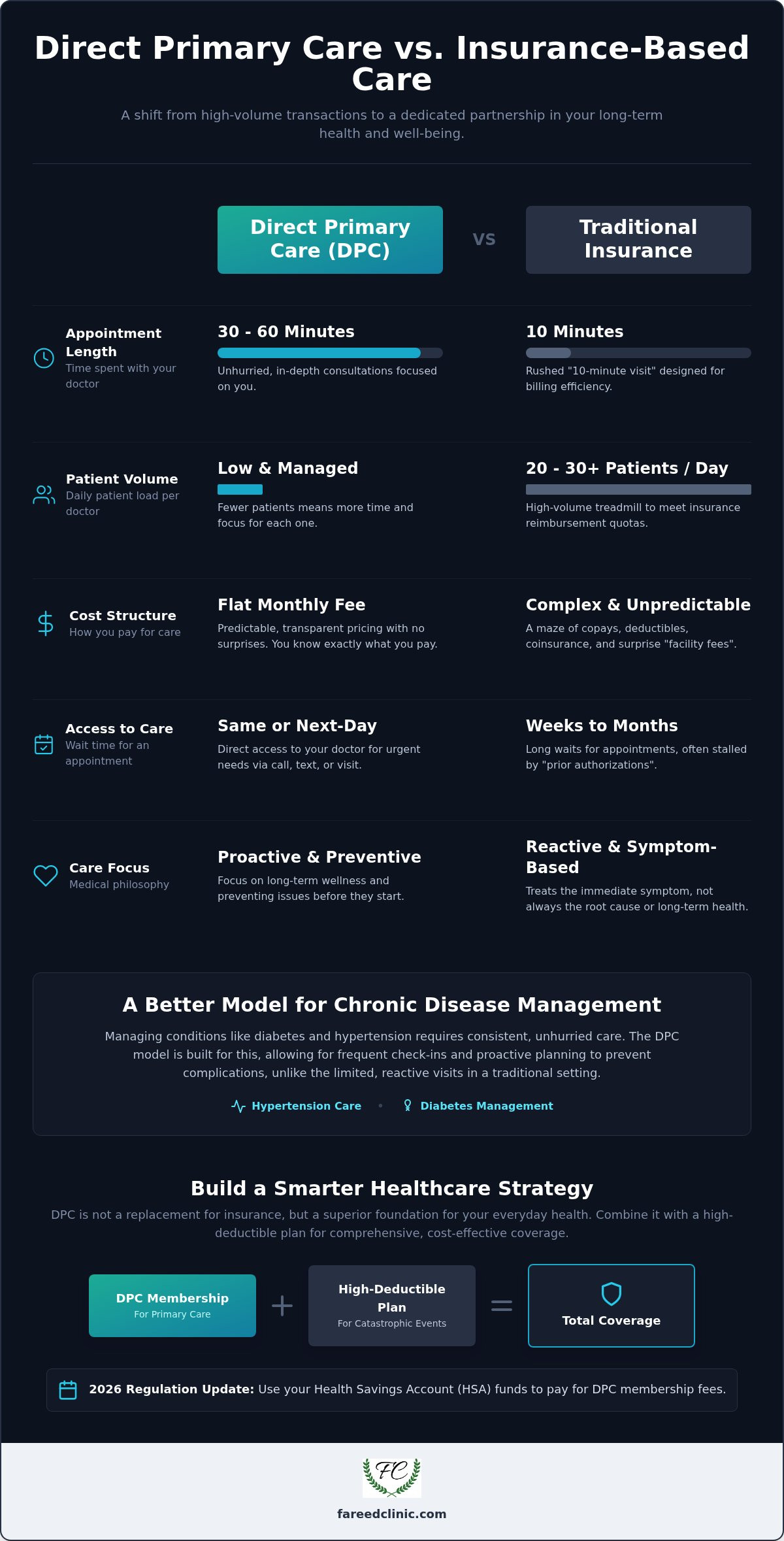
Most patients feel the rush the moment they step into a standard clinic. Traditional medical offices often operate on a high-volume treadmill because insurance reimbursement rates are notoriously low. This financial pressure forces doctors to see 20 to 30 patients every single day just to keep the office running. It's a system designed for high-speed billing, not for meaningful listening or deep clinical investigation. When you look at the reality of direct primary care vs insurance, the difference in time spent with your doctor is often the most striking factor.
This volume leads to the "10-minute visit" where you barely have time to sit down before the doctor is moving to the next exam room. When comparing direct primary care vs insurance, it's clear that the traditional model rewards reactive care. Physicians only have time to treat your most immediate symptom rather than looking at your long-term wellness. You're also left to deal with the frustration of unexpected "facility fees" or confusing copays that arrive in the mail weeks after your appointment. Understanding what is direct primary care offers a path away from this friction and back toward personalized health. This focus on individual patient needs is shared by high-standard private clinics globally, such as Kingsford Medical Services, which emphasizes comprehensive GP and specialist care without the constraints of traditional insurance billing.
The Impact of Third-Party Payers on Your Medical Consultation
When an insurance company sits between you and your doctor, they often dictate the timeline of your recovery. Insurance "prior authorizations" frequently stall necessary lab tests Plymouth MN, leaving you in a state of anxious waiting. At Fareed Clinic, we've chosen a different path by focusing on evidence-based, patient-centered care that ignores the "billing-first" mentality. In the traditional model, the insurance company is the client; in Direct Primary Care, the patient is the only priority. This structural shift is the foundation of Direct Primary Care (DPC), ensuring your needs aren't managed by a clock or a third-party payer.
Direct Primary Care vs. Insurance: Comparing Your Care
When you choose between direct primary care vs insurance, the most immediate difference you'll notice is time. In the traditional insurance world, you might wait three weeks for a simple consultation. DPC changes this by offering same-day or next-day access for urgent needs. This model replaces the stress of unpredictable deductibles and "after-the-fact" copays with a simple, predictable monthly fee. This financial clarity is why direct primary care without insurance is becoming a preferred choice for many families who want to know exactly what they're paying for.
The flexibility of this model also extends to specialized treatments. Instead of waiting for a specialist referral that might take months, members can receive a joint injection arthritis Plymouth MN directly in our comfortable clinic. This direct approach removes the middleman, ensuring that your care plan is based on your specific health needs rather than what a third-party payer is willing to cover this month.
Access and Chronic Disease Management: Where the Difference Shows
Managing long-term health requires more than a quick annual check-up. The DPC model for family physicians is built for the frequent, unhurried check-ins necessary for effective chronic disease management Plymouth MN. The stability found in direct primary care vs insurance allows us to focus on your long-term wellness goals without the pressure of a ticking clock. Whether you're balancing diabetes or hypertension, having a doctor who knows your story prevents complications. Our express care visits also provide a compassionate solution for minor illnesses, helping you avoid the high costs of an emergency room visit. If you're looking for a dedicated partner in your health, explore our membership options to find a plan that fits your life.
Choosing Wisely: How to Integrate DPC into Your Minnesota Healthcare Strategy
Transitioning to a more personalized healthcare model requires a clear, thoughtful plan. When you evaluate direct primary care vs insurance, it's vital to remember that DPC isn't a total replacement for insurance. It's your medical home base. While DPC handles your day-to-day needs, you still require a safety net for catastrophic events like major surgeries or hospitalizations. we want you to feel secure, knowing that every aspect of your health is covered without unnecessary complexity.
The most effective strategy for many involves pairing a direct primary care Plymouth MN membership with a High-Deductible Health Plan (HDHP). This combination ensures you have a dedicated physician for routine care while maintaining protection against the "big stuff." In 2026, federal regulations allow you to use Health Savings Account (HSA) funds to pay for DPC membership fees, with limits of $150 per month for individuals. This change makes the direct primary care vs insurance choice even more financially attractive for Minnesota families seeking transparency.
Maximizing Value with High-Deductible Plans and HSAs
By choosing a low-premium HDHP, you save money on monthly insurance costs and redirect those savings into a DPC membership that actually provides time and attention. This approach ensures your healthcare dollars are spent on proactive wellness rather than administrative overhead. To see if this model fits your life, consider the following:
You value having unhurried, 30-to-60-minute visits with your doctor.
You prefer a flat monthly fee over unpredictable bills and copays.
You want a local expert to help manage chronic medical problems proactively.
Fareed Clinic offers convenient online booking to make your transition to this patient-centered model as seamless as possible. We're here to be your partner in health, providing the reliable, compassionate care you deserve.
Reclaim Your Relationship with Healthcare
Choosing between direct primary care vs insurance is ultimately about deciding what kind of relationship you want with your physician. Removing the insurance treadmill allows for unhurried, evidence-based management of chronic conditions while prioritizing your long-term health. By pairing a membership with a high-deductible plan, you secure both everyday accessibility and catastrophic protection. We provide a safe, compassionate environment in Plymouth where your comfort is our priority.
Our team is ready to offer the personalized treatment you deserve, with convenient online appointment booking to fit your busy schedule. We invite you to Schedule a consultation at Fareed Clinic to see how Direct Primary Care can transform your health journey. You don't have to navigate your health alone; we're here to be your dedicated partner in every step of your wellness journey.
Frequently Asked Questions
Can I use my insurance for labs and imaging if I have a DPC membership?
Yes, you can certainly use your insurance for outside services. While your membership covers your time with us, you can still submit claims to your insurance provider for lab tests and imaging performed at external facilities. This flexibility allows you to maximize your benefits while enjoying the unhurried, personalized attention that defines the direct primary care vs insurance experience.
Does Direct Primary Care count as 'minimum essential coverage' under the law?
No, a DPC membership is not a health insurance policy and doesn't qualify as minimum essential coverage on its own. It's a service agreement for primary care. To ensure you have full protection, we recommend pairing your membership with a high-deductible health plan. This combination provides catastrophic coverage for emergencies while giving you unlimited access to our compassionate primary care team.
What happens if I need to see a specialist or go to the hospital?
If you require specialized care or hospitalization, your DPC physician serves as your primary advocate. We coordinate with specialists and hospital teams to ensure they have your full medical history. While your membership doesn't cover the costs of hospital stays or specialist fees, having a dedicated home base ensures your care remains cohesive and focused on your long-term wellness goals.
Is Direct Primary Care the same thing as 'concierge' medicine?
DPC is different from concierge medicine in its billing and accessibility. Concierge practices often bill insurance in addition to a high membership fee. DPC simplifies everything by removing the insurance middleman entirely for primary care services. This model makes the direct primary care vs insurance choice a more affordable and transparent option for families who want high-quality care without the hidden costs.


Comments